Table of contents
One punch, one mistimed shot, one split-second scramble, and a division’s hierarchy can look unrecognizable by the time the broadcast signs off. In 2024 and 2025, MMA has offered a steady stream of results that felt “impossible” until they happened, from short-notice title swings to contenders derailed by underdogs who refused the script. Rankings, after all, aren’t only about belts, they’re about momentum, matchmakers’ trust, and the public’s memory, and an upset can reorder all three overnight.
When one result scrambles the whole ladder
How fragile is “top five” status? More than most fans want to admit, because rankings are built on recent wins, quality of opposition, and timing, and a single upset can puncture a résumé faster than a losing streak. Look at what happened when Leon Edwards outpointed Kamaru Usman in March 2023 to retain the welterweight belt: it wasn’t just a champion defending, it was the confirmation that the division had genuinely turned a page, and it instantly reshaped how contenders were framed, from Colby Covington’s long layoff to Belal Muhammad’s win-streak narrative. When Edwards then lost to Muhammad in July 2024, another rapid reshuffle followed, and the conversation moved from “Who can beat Leon?” to “How long can Belal hold off the fresh wave?” in the space of one weekend.
The same mechanism plays out even without a title at stake. When Sean Strickland stunned Israel Adesanya in September 2023, the upset didn’t merely swap champion and challenger, it reopened matchmaking doors that had looked sealed, because Adesanya’s aura had functioned as a kind of gravitational pull in the middleweight ecosystem. Suddenly, rematches, style-clashes, and contender timing all changed value; a fighter who matched well with Strickland could look more viable overnight than someone who had been climbing methodically toward Adesanya.
There is also the arithmetic of perception, and it moves quickly. Betting markets, which aggregate thousands of opinions into a single number, often show just how abrupt these turns can be; in major UFC upsets, pre-fight lines can flip the implied hierarchy in hours, then rankings, media narratives, and even sponsorship leverage catch up afterward. The upset is the spark, and everything else is the fuel: highlight clips replayed on social media, post-fight pressers that recast careers, and a new “what if?” storyline that the promotion can sell immediately.
Champions fall, contenders cash in fast
Can an upset change careers more than belts do? Frequently, because it redistributes opportunity, and opportunity is the most valuable currency in MMA. When Julianna Peña submitted Amanda Nunes in December 2021, it wasn’t only a historic shock at bantamweight, it forced an instant rewrite of the division’s pecking order, and it gave Peña the kind of promotional leverage that contenders spend years chasing. Nunes later reclaimed the title, yet the upset had already proven its point: one night can bend an entire weight class around a new axis.
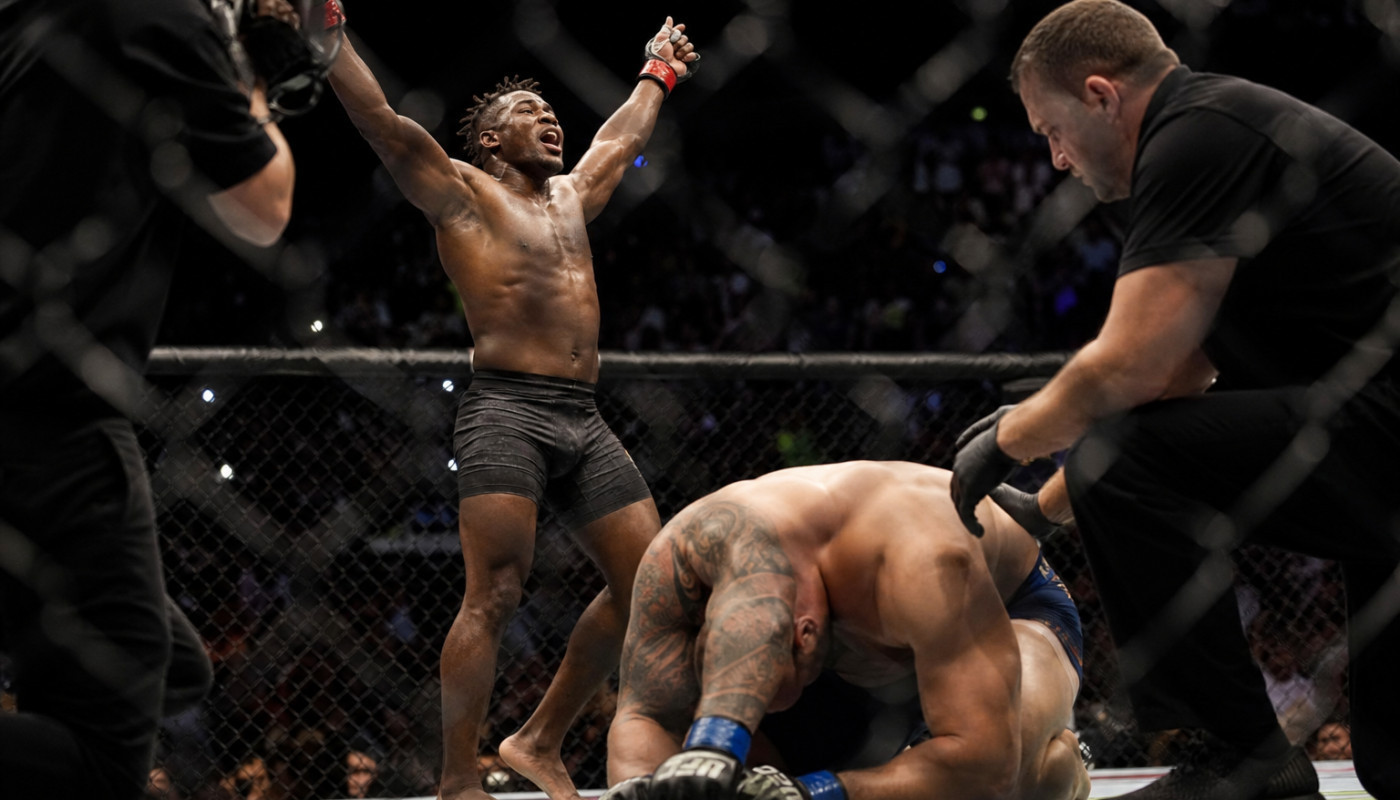
At heavyweight, the pattern can be even harsher, because the finishing rate is high, and one clean connection can undo months of careful matchmaking. When Francis Ngannou knocked out Stipe Miocic in March 2021, it felt like the division had entered a new era; then, when Ciryl Gane dominated Derrick Lewis later that year to claim the interim title, it created a parallel hierarchy, and forced the promotion to resolve it fast. These are not slow-burn ranking stories, they are abrupt pivots, and the contenders who “cash in” are usually the ones who can fight again quickly, stay healthy, and take whatever slot opens next.
Lightweight and bantamweight have shown another version of the same phenomenon: depth. In stacked divisions, an upset can be less about a single superstar collapsing, and more about the sheer number of credible challengers compressing the ladder. When Islam Makhachev edged Alexander Volkanovski in February 2023, it reinforced Makhachev’s position; when Volkanovski was then knocked out by Ilia Topuria at featherweight in February 2024, it didn’t directly touch lightweight, yet it shifted the “champion vs champion” conversation that had shaped matchmaking expectations across two divisions. The knock-on effects matter, because champions don’t live in isolation anymore, they live inside a cross-division content machine, and an upset changes what the machine can plausibly sell.
That’s why the immediate aftermath can be just as important as the upset itself. Some fighters parlay the moment into a quick turnaround, a lucrative defense, or a high-profile rematch; others lose the thread, sit out too long, or get booked into a style nightmare, and the ranking bump evaporates. The sport is ruthless, and it rewards the athlete who can convert surprise into sustained relevance.
Rankings aren’t just math, they’re politics
Who decides what an upset “means”? Official panels, promoters, analysts, and fans all tug at the same rope, and the rope rarely moves in a straight line. The UFC’s rankings, for example, are determined by a media panel, yet they are also influenced by availability, promotional plans, and the simple fact that not all wins are treated equally in the public mind. A close decision over a respected veteran may carry less narrative weight than a violent knockout of a rising prospect, even if the “quality of opponent” argument points the other way.
That tension becomes obvious after controversial results. Split decisions can trigger a ranking tug-of-war, because half the audience believes the upset is “real,” and the other half treats it as a statistical accident. In those cases, matchmakers often use the next booking as the tiebreaker: if the winner is placed immediately into an even bigger spot, the upset is validated; if they are given a slower, risk-managed path, the promotion is, in effect, hedging its own interpretation. Fighters understand this dynamic, which is why post-fight callouts have become a kind of secondary contest, a race to define the upset before someone else does.
Data complicates the picture further. Independent ranking systems tend to weight consistency and opponent strength more heavily than hype, and they can diverge sharply from “what it feels like” after a big shock. That’s also where fans increasingly go to ground their arguments, especially as the sport grows and the schedule floods attention; a weekend’s worth of emotion can be tempered, or amplified, by looking at longer-run results, multi-year win-loss records, and comparative opponent pools. For readers who want a deeper dive into how formats and probabilities can be framed around unpredictable outcomes, resources such as FightMatrix can help contextualize how volatility is modeled, and why a single surprise can ripple through a larger system.
None of this makes rankings “fake.” It makes them human, and therefore contestable. Rankings are part sporting measurement, part storytelling tool, and the upset is the moment those two parts collide in public, with everyone trying to pin meaning to a result that, by definition, defied expectation.
The ripple effect: matchmaking, money, rematches
What happens on Monday matters almost as much as Saturday night. Upsets reshape matchmaking because they change what is immediately sellable, and they also alter what is strategically necessary; a champion upset can force an instant rematch, a contender upset can create a new “fresh challenger” narrative, and a prospect upset can slow a division’s conveyor belt. Promotions aren’t only reacting to who won, they’re reacting to what the audience now believes, and belief is measurable in ticket demand, broadcast interest, and online engagement.
Financially, the upset can be transformative. Performance bonuses, new contracts, headline slots, and sponsor attention often follow, yet they do not distribute evenly; a fighter who wins spectacularly tends to capture a larger share of the upside than one who wins quietly. That reality encourages risk-taking, and it can also produce the next upset, because athletes chase finishes, scramble for momentum, and sometimes abandon the safer path that might have protected them on the cards. Meanwhile, the loser’s economic picture can tighten quickly, particularly if they were positioned as a near-term title challenger and are suddenly forced into a rebuilding bout with less upside and similar danger.
Rematches are the sport’s pressure valve, and upsets tighten that valve. If the upset winner is credible and decisive, the division may move forward; if the result feels fluky, the push for an immediate redo becomes loud, and it can stall the rest of the top ten for months. Fans often complain about rematch culture, yet in a business built on uncertainty, rematches are one of the few tools that can stabilize a narrative, confirm whether the shock was an outlier, and reassure viewers that the hierarchy still has a logic.
There is also the international and cross-promotional dimension. A surprise champion from a new market can open doors, accelerate a division’s travel schedule, and change where big events are staged; a surprise contender can shift who gets featured on pay-per-view undercards, and who is pushed in regional media. Upsets are not only sporting events, they are commercial pivots, and the rankings are where those pivots become visible to the public.
Planning the next fight weekend
Before booking travel, check official bout announcements, because rematches and short-notice replacements can change a card quickly. Set a clear budget for tickets, transport, and last-minute price swings, and look for any local or venue-related discounts that may apply, including early-bird sales or limited presale windows for members.
Similar articles

Coaching Beyond the Court: Impact of Sports Mentors on Life

The Psychology of Extreme Sports: Risk, Reward and Reality
